

For many people, the phrase “real estate investment” immediately brings to mind millions of naira, luxury properties, and wealthy investors. This perception can make property investment seem out of reach for people who are just starting their financial journey.
The truth is, you do not need to be wealthy before you begin investing in real estate. What you need is the right information, a clear strategy, financial discipline, and a realistic understanding of what you can afford.
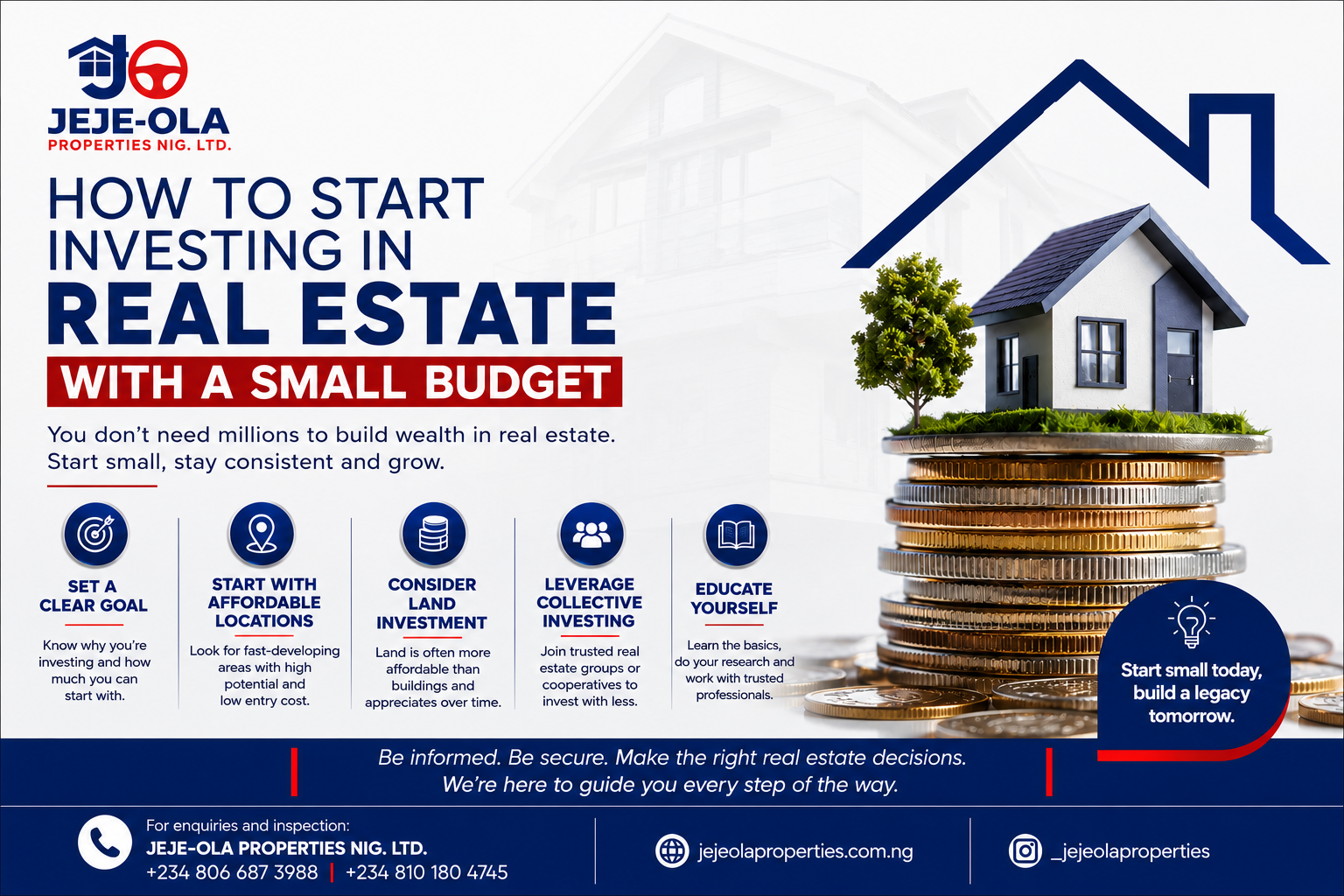
Real estate offers different entry points for investors, from purchasing smaller plots of land in developing areas to taking advantage of structured payment plans. The goal is not necessarily to make a large investment from the beginning, but to make a well-informed investment that aligns with your budget and long-term financial goals. With the right approach, you can start small, build your investment gradually, and increase your portfolio as your financial capacity grows
Can You Really Invest with a Small Budget?
Yes.
One of the common misconceptions about real estate is that you need tens of millions of naira before you can become a property investor. In reality, the market offers opportunities for different levels of financial capacity, depending on the location and type of property. Starting with a modest investment can allow you to enter the market, build experience, and gradually expand your portfolio as your financial capacity increases.
Start within your means, conduct proper due diligence, and invest with a long-term strategy.
Why Consider Real Estate?
Real estate can be an important part of a long-term investment strategy because property can generate value in several ways. Depending on the type and location of the investment, property may provide:
- Potential capital appreciation
- Rental or other income opportunities
- A tangible asset that can be held over the long term
- A potential hedge against inflation
- An asset that can be passed on to future generations
As cities expand and infrastructure develops, demand for property in strategic locations can increase, potentially creating opportunities for investors who identify promising areas early.
The question, therefore, is not simply “Can I afford to invest in real estate?” but “What type of real estate investment can I responsibly afford, and how can I get started?”
Practical Ways to Start Investing with a Small Budget
1. Start with Affordable Land
Land can be one of the more accessible entry points into real estate investment, particularly for first-time investors working with a limited budget.
Compared with developed properties, land may require a lower initial investment, depending on its location, size, title, and development status. It can also offer the potential for long-term appreciation as the surrounding area develops. Areas experiencing infrastructural development, new road construction, government projects, or expanding residential communities often appreciate rapidly.
Rather than waiting until you can afford a high-value property, starting with a smaller plot within your budget can give you an opportunity to enter the real estate market and build from there.
2. Take Advantage of Flexible Payment Plans
You do not always have to make the full purchase price upfront.
Some real estate companies offer structured payment plans that allow buyers to spread their payments over several months or longer periods, depending on the property and the terms of the transaction.
Flexible payment plans makes property ownership achievable for many working professionals and entrepreneurs because it can help you:
- Spread the cost of the investment over time
- Manage your cash flow more effectively
- Build an asset without committing your entire savings at once
- Plan your finances around a defined payment schedule
Before committing to a payment plan, however, make sure you understand the total cost, payment deadlines, and terms and conditions of the purchase.
3. Save Specifically for Real Estate
If you are not yet ready to invest, you can start by intentionally saving towards your first property.
Create a dedicated savings plan and contribute consistently, even if the amount is modest. Over time, these contributions can help you build the funds needed for an initial deposit or purchase.
The key is to make real estate investing part of your financial plan rather than waiting until you have a large amount of money available.
4. Focus on Developing Locations
The location of a property can significantly influence its future value.
While established areas may offer greater infrastructure and convenience, emerging locations can provide more affordable entry points for investors. Areas experiencing new roads, commercial activity, residential development, or other infrastructure improvements may have potential for future growth.
When considering a developing location, look beyond its current state. Research planned infrastructure, accessibility, existing development, and the factors likely to influence demand in the future.
5. Research Before You Invest
Whatever the budget, proper research and due diligence are essential. Attractive marketing, pressure to make a quick decision, or promises of high returns should not determine your investment decision.
Before making a payment:
- Verify the ownership and title documents
- Confirm relevant government approvals
- Inspect the property or have it independently inspected
- Research the surrounding area, accessibility, and development potential.
- Consider existing and planned infrastructure
- Understand the full costs associated with the purchase
- Ensure important representations are properly documented
- Work with reputable and properly verified real estate professionals
Taking these steps can help you identify potential risks, avoid costly mistakes, and make a more informed investment decision.
6. Invest Consistently Instead of Waiting for Perfection
Some people keep postponing their first investment because they are waiting for a larger budget or what they consider the “perfect” opportunity.
While it is important to make informed decisions, waiting indefinitely can also prevent you from taking practical steps towards your investment goals.
Rather than focusing solely on making a large investment immediately, consider what you can realistically afford today and how you can gradually build from there.
The goal is not to start big. It is to start wisely.
Conclusion
A limited budget does not have to prevent you from investing in real estate. What matters is understanding your options, investing within your means, and making decisions based on proper research and long-term goals.
You do not have to start with a large property or a significant amount of money. A modest investment, made carefully and at the right time, can be the first step towards building a property portfolio over time.
At JEJE-OLA PROPERTIES NIG. LTD., we are committed to helping individuals make informed real estate decisions and find property investment opportunities that align with their goals and financial capacity. Whether you are purchasing your first plot of land or looking to expand your portfolio, our team is available to provide the guidance you need to invest with greater confidence.
The best time to start building your real estate portfolio is when you are financially prepared to make a well-informed decision. Start where you are, plan carefully, and build from there.